1 Corinthians 2:2
“For I determined not to know anything among you, save Jesus Christ, and Him crucified” — 1 Corinthians 2:2.
These words of Paul the Apostle are not casual. They arise from deep experience, reflection, and correction. At one time, Paul stood at Areopagus and reasoned with philosophers, using intellectual arguments to persuade them. Yet the results were limited. This did not mean Paul lacked wisdom or intellectual depth, but he came to realize that human reasoning alone cannot transform lives. From that point, he resolved to center his message not on philosophy, but on the Cross of Christ.
The situation in the Corinthian church also influenced this emphasis. This was a church Paul helped establish along with faithful co-workers like Apollos, Aquila, and Priscilla. Yet, they questioned his apostolic authority. They ridiculed his physical weakness and appearance. They caused him emotional pain and even financial strain. In such a context, Paul did not defend himself with arguments or credentials. Instead, he pointed them back to the Cross. The Cross became his message, his strength, and his answer.
We too live in an age flooded with information, unlimited, uncensored, and often unnecessary. Opinions, arguments, and voices surround us constantly. In such a world, it is easy to lose focus. When our eyes are not fixed on the Cross, our spiritual life begins to drift.
One danger is what we may call a “painless Pentecost,” a desire for power without sacrifice, glory without surrender. The sons of Zebedee, James the Apostle and John the Apostle, once asked Jesus for positions of honour, to sit at His right and left in glory. They desired the crown, but not the cross. Interestingly, those who criticized such ambition were not necessarily righteous themselves, reminding us that criticism alone is not a mark of spiritual maturity.
Jesus responded to them with striking clarity: “You do not know what you are asking.” The Cross always precedes glory. Similarly, in Genesis 30, Rachel cried out, “Give me children, or I die.” Human desires can be intense, but they are not always aligned with God’s deeper purposes. Without the Cross, even sincere desires can become misplaced.
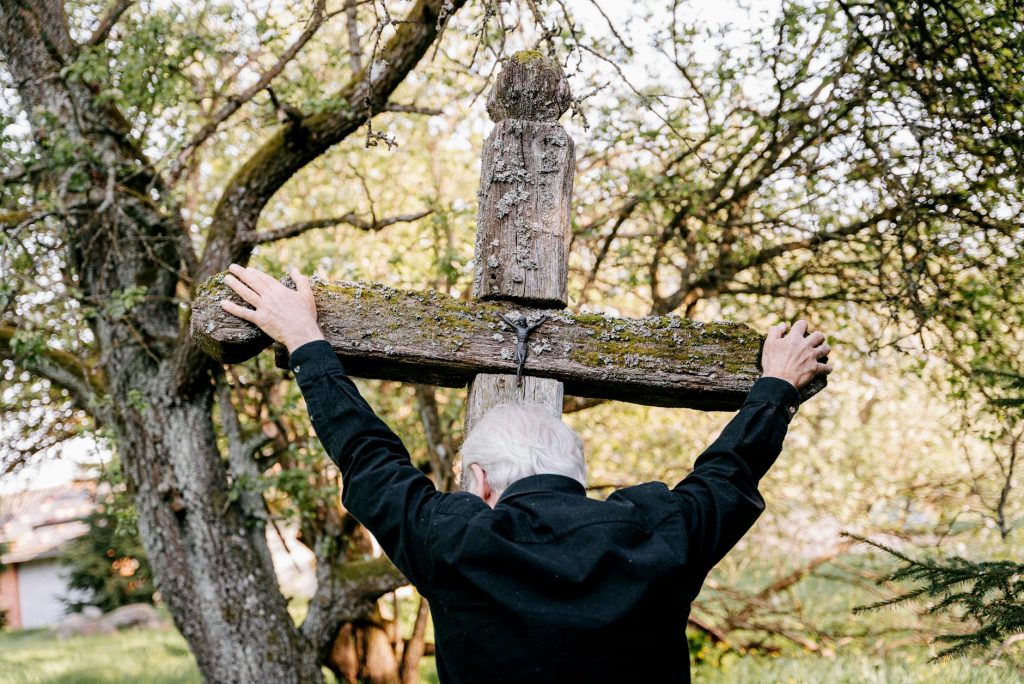
The Cross teaches us essential truths. It reveals the seriousness of sin, the depth of God’s love, and the cost of redemption. It calls us not only to believe, but to die to self. It challenges our pride, our ambitions, and our self-centeredness. It reminds us that the Christian life is not about comfort, but about transformation.
When the Cross is at the center, our perspective changes. We no longer seek recognition, but surrender. We no longer chase position, but obedience. We no longer rely on human wisdom, but on God’s power.
Paul’s determination must become ours. In a world full of distractions, philosophies, and competing voices, we must come back again and again to the simplicity and power of the Cross. For it is at the Cross that we find forgiveness, identity, purpose, and eternal hope.
May our lives, our message, and our ministry be centered on Jesus Christ and Him crucified. For when the Cross is central, everything else finds its proper place.