
Introduction
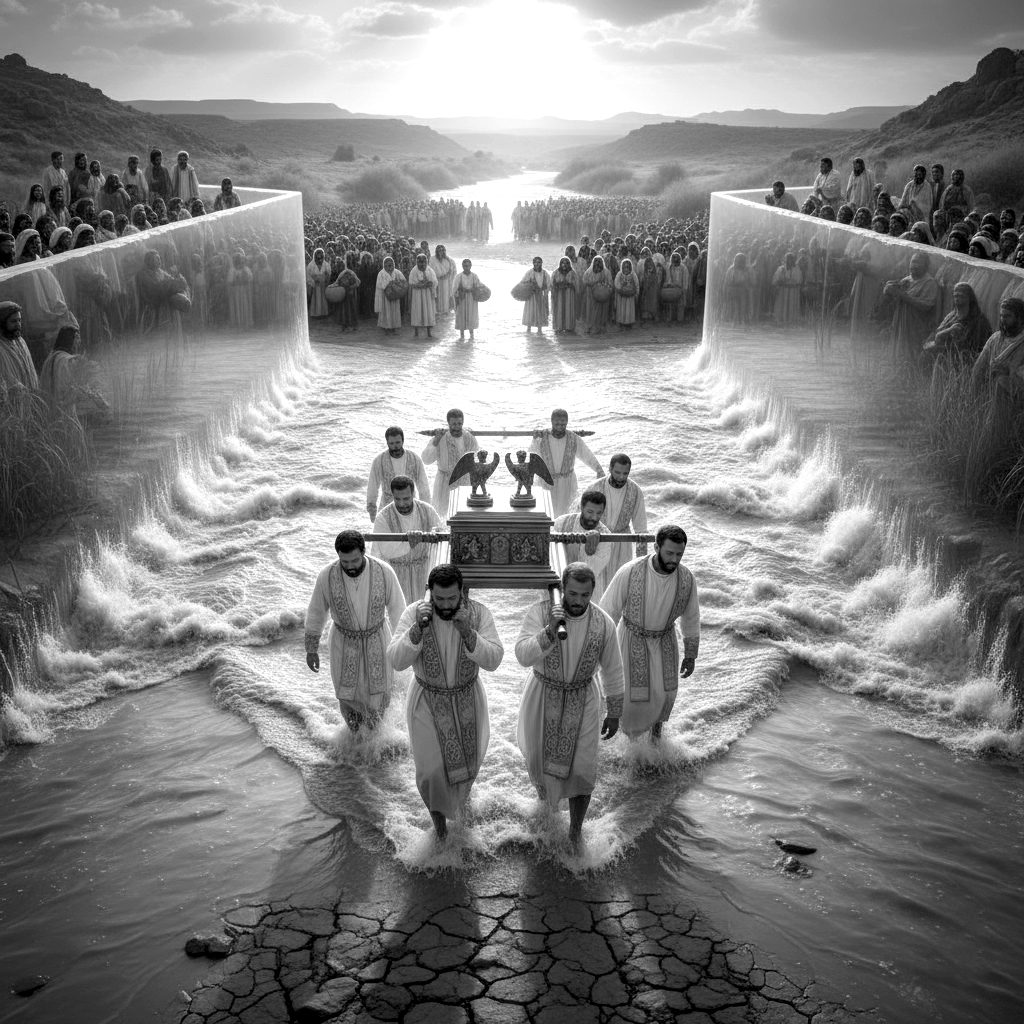
In the biblical narrative of Joshua 3, the Israelites stand at the Jordan River’s edge, a swollen barrier marking the threshold to the Promised Land. After decades of wilderness wandering, they face not merely a physical obstacle but a spiritual crucible. Joshua, their leader, commands, “Consecrate yourselves, for tomorrow the Lord will do wonders among you.” This call to purity—holistic sanctification of heart, mind, and community—sets the stage for divine triumph. Far from a ritualistic act, purity embodies surrender to God’s holiness, enabling His miraculous intervention and the fulfillment of ancient promises.
Joshua 3 transcends its historical context, offering a timeless paradigm where purity aligns humanity with divine power. For the Israelites, purity meant breaking from past failures, revering God’s presence, and stepping forward in obedient faith to see the waters part. Victory in this story begins not with military might or clever plans but with lives set apart in sanctity, revealing a profound truth: true conquest originates in the consecrated heart. The flooded Jordan, teeming with harvest-season currents, symbolizes life’s overwhelming challenges—those moments when progress seems halted by forces beyond control. Yet, the narrative unveils purity as the catalyst that transforms such barriers into bridges, inviting reflection on how sanctification turns stagnation into forward momentum.
For today’s believers, it charts a course through personal struggles, communal discord, or missional challenges in a skeptical world. Purity prepares us to trust divine guidance, witness wonders, and advance God’s redemptive purpose. It challenges the modern ethos of self-reliance, proposing instead that profound victory emerges from yielded lives, where purity acts as the lens sharpening our vision of the divine at work. This exploration traces purity’s role across three dimensions: preparation through consecration, empowerment through divine truth, and triumph in lived application, culminating in the eternal victory foreshadowed in Christ.
The narrative unfolds with the people encamped by the raging Jordan, a river at flood stage during harvest time, rendering any natural crossing impossible. Yet, the divine strategy centers on purity. Joshua’s directive echoes earlier calls to holiness, underscoring that encounters with the sacred require purified vessels. Profoundly, this moment captures the tension between human vulnerability and divine potency: the Israelites, scarred by wilderness trials, must first confront their inner landscapes before tackling the outer one. As we delve into this account, we discover how purity not only facilitated a remarkable crossing but also established a blueprint for overcoming life’s formidable barriers. In a culture often marked by moral ambiguity, this story invites us to rediscover sanctity as the key to unlocking supernatural breakthroughs.
Moreover, Joshua 3 invites profound contemplation on transition—the shift from promise to possession. The Jordan represents a liminal space, a boundary between what was and what could be. Purity, in this light, is the rite of passage, purging remnants of doubt and disobedience to usher in a new era. It teaches that victories are not seized but received, not through force but through finesse of the spirit. By expanding on these themes, we uncover layers of wisdom: purity as the guardian of divine intimacy, the architect of communal strength, and the harbinger of miraculous shifts. Through thoughtful expansion on each facet, we will illuminate the depth of this theme, inspiring a renewed commitment to purity in pursuit of victory.
Purity as Preparation: Consecration for Divine Wonders
The narrative pivots on Joshua’s call to consecration, positioning purity as the foundation for victory. To “consecrate” means to set apart for sacred purpose, blending outward acts like cleansing with inward repentance and devotion. For the Israelites, this severed ties to their forebears’ rebellions, renewing their identity as God’s covenant people. It prepared them to inherit the land promised long ago, transforming them from wanderers into conquerors ready to claim their destiny. Profoundly, consecration here is not superficial; it is a deep realignment, where purity excavates the soul, removing the debris of past wanderings to lay a stable foundation for future steps.
This preparation was deeply practical and involved the entire community. The people were instructed to follow the Ark of the Covenant, carried by priests, which symbolized God’s throne and active presence among them. By maintaining a reverent distance, the Israelites acknowledged the profound majesty of the divine, while still relying on it to lead them through unfamiliar paths. This distance promoted a sense of humility and collective unity, protecting against any casual or presumptuous approach that could undermine their mission. The profound idea emerges: purity fosters a sacred space where fear gives way to faith, and isolation to interconnection.
Purity in this context demanded a comprehensive moral alignment. It involved openly confessing wrongdoing, mending broken relationships, and recommitting to shared values. In a society composed of diverse tribes with histories of internal strife, such sanctification created a unified front, turning potential weaknesses into strengths. Consider the psychological depth: consecration addresses the human tendency toward fragmentation, weaving disparate threads into a tapestry of purpose. The priests’ pivotal role further highlights purity’s transformative power. As they stepped into the Jordan’s turbulent floodwaters, their act of sanctified obedience became the catalyst for the miracle. The waters dramatically halted upstream, piling up in a heap, and the riverbed dried, allowing the entire nation to cross safely on solid ground. This sequence demonstrates that purity cultivates a profound trust, one that invites and activates divine intervention in seemingly impossible situations. It reveals a cosmic principle: when purity meets action, the natural yields to the supernatural.
From a psychological perspective, the process of consecration heightened anticipation and mental readiness. Dedicating time to purification shifted mindsets from doubt or complacency to eager expectancy of what God would accomplish. Sociologically, it strengthened bonds within the group, forging a sense of shared purpose under a transcendent cause. Without this foundational purity, the Jordan would have stood as an insurmountable divide, halting progress and perpetuating exile. With it, however, the river transformed into a gateway of opportunity, symbolizing how sanctity turns obstacles into avenues for advancement.
Delving deeper, Joshua 3 unveils purity as a proactive stance against entropy—the natural drift toward disorder. In the wilderness, impurity bred rebellion; at the Jordan, purity births order. This profound shift underscores that victory is premeditated in the quiet of consecration, not improvised in the heat of battle. Imagine a gardener tilling soil before planting: purity is that tilling, ensuring fertile ground for growth. In personal terms, it involves shedding habits or attitudes that hinder progress, creating space for breakthroughs. Collectively, it builds resilience, as seen in the Israelites’ orderly procession. In essence, purity lays the groundwork, aligning human hearts with the potential for divine wonders. It ensures that when the moment of testing arrives, individuals and communities are not caught unprepared but are positioned to experience victories that surpass human capability.
Purity in Divine Dynamics: The Theology of Sovereign Victory
Purity’s role extends beyond mere preparation, weaving into the theological fabric of God’s character and redemptive plan. The Jordan’s parting reveals divine sovereignty, mastery over creation that echoes earlier miracles and affirms God as history’s orchestrator. This was no coincidence or natural event; the waters standing still far upstream demonstrated control over the elements, fulfilling ancient covenants and advancing the promise to grant the land despite generations of human shortcomings. It portrays a God who is faithful, turning promises into reality through displays of power that inspire awe. Profoundly, this miracle posits purity as the human counterpart to divine omnipotence, where sanctification amplifies God’s glory in the earthly realm.
At the heart of this theology is purity’s alignment with divine holiness. Sanctification calls for separation from impurity, enabling intimate communion with a God who is both exalted in transcendence and intimately present. The Ark’s central role in guiding the people balanced this duality: it demanded reverent distance to avoid peril, yet invited following to experience closeness. Only through purity could the people engage with this holy presence without facing consequences, their obedience becoming the key that unlocked favor and protection. The priests’ courageous step into the waters exemplifies a theology of radical dependence—where true victory emerges not from self-reliance but from trusting in divine assurances, even when circumstances appear overwhelming. This profound dynamic suggests that purity is the bridge between finite humanity and infinite divinity, facilitating a sacred exchange.
Furthermore, the requirement of consecration before witnessing wonders highlights an invitational aspect of grace. God initiates the action to display His glory, but purity readies the recipients to fully participate and appreciate it. This is not about earning favor through effort but responding in faith, creating a partnership where human sanctity meets divine initiative. Profoundly, it challenges merit-based spirituality, proposing instead a relational theology where purity is the language of love, spoken in obedience. On a collective level, the Israelites’ joint sanctification facilitated a shared victory, illustrating how a purified community can pursue and attain a common inheritance. The event carries rich symbolic layers, prefiguring themes of purification leading to renewed life, where triumph over disorder and separation comes through immersion in divine power. The dry-ground passage evokes rebirth, a profound metaphor for emerging from trials unscathed, fortified by sanctity.
The miracle also held a broader testimonial purpose, proclaiming the reality of a living God to onlookers and surrounding cultures. This aligns purity with a missional impulse: lives set apart become conduits for revealing divine truth, drawing others into the sphere of victory. In this way, the crossing was not just a private triumph but a public declaration, extending the invitation to recognize and align with sovereign authority. Profoundly, it positions purity as evangelistic, where personal holiness radiates outward, influencing spheres beyond the immediate.
Walking in Purity: Victorious Living in Today’s World
Purity remains the path to victory, equipping believers to navigate personal temptations, societal pressures, and spiritual battles in the contemporary landscape. As a people called to holiness, we engage in ongoing sanctification through practices like heartfelt repentance, dedicated prayer, and unwavering ethical integrity. These habits combat internal conflicts—such as unchecked desires or lingering resentments—by fostering discipline and reliance on foundational truths, supported by networks of accountability that encourage growth and restoration. Profoundly, purity here is not ascetic denial but abundant living, where sanctification liberates from bondage, opening vistas of freedom.
Churches play a vital role in nurturing this purity, implementing communal initiatives that echo the Israelites’ consecration. Groups for open confession help rebuild trust and fellowship, while periods of fasting sharpen spiritual focus and renew communal vision. Worship gatherings, with their emphasis on adoration and instruction, serve to realign collective hearts, creating an environment ripe for divine movements. Such preparations position communities for extraordinary outcomes, whether in the form of spiritual revivals that ignite passion or tangible impacts that address societal needs like poverty or injustice. The profound parallel: just as the Ark unified the tribes, modern purity practices coalesce diverse believers into a formidable force.
Translating the Ark’s leadership into modern terms means surrendering to wise, spirit-led direction, choosing enduring principles over transient cultural norms. In decision-making processes—be it in personal relationships, professional endeavors, or organizational strategies—intentional discernment through reflection and counsel paves the way for victorious outcomes, steering clear of shortcuts that lead to regret. For example, a leader confronting ethical dilemmas might pause for purification, emerging with clarity that leads to innovative solutions and strengthened integrity. Profoundly, this emulates the priests’ step: purity empowers bold initiative, turning hesitation into holy momentum.
The boldness exemplified by the priests’ advance into the waters inspires proactive engagement today. This could manifest in courageously sharing convictions in environments resistant to faith, extending compassion to those on society’s margins through service projects, or advocating for equity in public spheres. By framing teachings around this narrative, communities can empower members to view uncertainties not as threats but as arenas for divine conquest, converting potential setbacks into powerful stories of overcoming. The profound insight: purity infuses ordinary actions with extraordinary potential, making every step a potential miracle.
Purity also cultivates unity, serving as an antidote to division in an increasingly polarized society. Efforts toward reconciliation—through honest conversations and forgiveness—pave the way for joint ventures, such as inter-group collaborations on community outreach or advocacy for social causes. This unified approach mirrors a cohesive body, amplifying impact and demonstrating the strength found in harmonious purpose. In practical terms, it means bridging gaps across differences, whether generational, cultural, or ideological, to present a compelling model of collective victory. Profoundly, unity born of purity reflects divine order, countering chaos with coherent witness.
Drawing on the assurance of divine faithfulness, as evidenced in the Jordan’s transformation, sustains perseverance through trials. Recalling such interventions bolsters resilience, grounding hope in the promise of ultimate triumph over adversity. As agents of witness, lives marked by purity naturally illuminate truth, utilizing various platforms—from personal interactions to digital spaces—to convey the vibrancy of a transformative faith. The symbolic resonance of the crossing urges a commitment to embodying purification in daily existence, living out principles that reflect renewed vitality and purpose. Profoundly, this extends purity’s missional reach, turning personal sanctity into societal leaven.
An attitude of obedient expectancy opens doors to contemporary wonders, such as healed relationships, innovative breakthroughs, or revitalized communities. Purity thus fuels mission, evolving individuals and groups into dynamic forces that expand influence through dedicated action and authentic testimony. In educational settings, instilling purity helps younger generations navigate cultural challenges, building resilient identities. For those in leadership, it provides safeguards against exhaustion, promoting balanced rhythms and vigilant self-care. On a global scale, this approach supports endeavors in diverse contexts, ensuring that efforts are fruitful and aligned with higher purposes.
Moreover, walking in purity invites profound self-awareness: recognizing that victories are iterative, built through daily consecrations. In relationships, it fosters empathy; in vocations, innovation; in crises, endurance. This holistic application transforms purity from a static ideal into a living rhythm, synchronizing human efforts with divine timing.
Conclusion
Joshua 3 reveals purity as the path to victory: consecration prepares the heart and community, divine truth empowers with sovereign insight, and lived holiness leads to triumphant application. This commitment to sanctification honors the sacred presence, unleashes miraculous possibilities, and realizes long-held promises, inviting all to embrace a life of holiness that surmounts every barrier. In the ultimate fulfillment through Christ, this journey culminates in eternal victory, compelling us to pursue purity diligently, proclaim truth fearlessly, and step into the abundance of divine assurances. As we confront our own Jordans—those formidable challenges that test resolve—may the pursuit of purity illuminate the way, guiding us toward the complete realization of God’s redemptive vision, where every act of consecration echoes with the power of lasting triumph.
To further reflect on this, consider how purity operates in subtle, everyday moments: a choice to forgive amid conflict, a decision to uphold integrity in ambiguity, or a commitment to nurture relationships with honesty. These small steps accumulate, building momentum toward larger victories. The narrative encourages not perfection but persistent alignment, where grace covers shortcomings and propels forward movement. In families, purity fosters environments of trust and growth; in workplaces, it inspires ethical excellence; in societies, it seeds justice and compassion. Profoundly, embracing purity transforms not just individual lives but entire communities, creating ripples of victory that extend far beyond the immediate. This timeless principle, rooted in the Jordan’s crossing, remains a beacon for all seeking to navigate life’s floods with faith and fortitude. It whispers that in purity’s embrace, the ordinary becomes ordained, and the impossible, inevitable.