There is a strong concept in the Bible that makes God’s chosen people unique and distinct from others. This concept is observed as keeping a person’s or community’s life holy or dedicated. In the Bible, in relation to God’s interference, this experienced is called ‘consecration.’ In the ancient social and cultural context of Israel, consecration was practiced through certain rituals, and the most prominent of which was ‘circumcision.’ Although this may seem unusual to modern believers, the biblical idea of circumcision carries important spiritual meanings and contextual interpretations that strengthen a person’s relationship with God. This essay discusses the idea of circumcision alongside the understanding of consecration in the fifth chapter of the Book of Joshua. It also highlights the contemporary significance of consecration in building up the Christian church today.
‘Circumcision’ as a Means of Consecration
To understand the inner meanings of both ‘circumcision’ and consecration, it is helpful to begin with their meanings in the original biblical context. In the Bible, the word consecration is closely connected to the idea of holiness. This concept comes from the Hebrew word qodesh (Lev. 10:10) in the Old Testament and the Greek word hagiasmos (Rom. 6:19) in the New Testament. The idea of being ‘holy’ means being completely different or set apart from ordinary or common use. In Hebrew usage, the word for ‘consecrated’ first referred to the burnt offering and then to anything considered ‘holy’ (set apart) for the glory of God. Thus, ‘consecrated’ refers to people or objects that are separated, isolated, or distinct from their surroundings. Culturally, the term qedoshim (‘holy people’) is used for a priestly group, especially the temple servants who assisted the priests in the temple. Symbolically, it describes servants of the Lord or whoever dedicated to the work assigned by God.
The Hebrew word for ‘circumcision’ is mul, meaning ‘to curtail’ or ‘to remove.’ In the biblical account, every male was to be circumcised (Gen. 17:10-11), and the appointed time for circumcision was the eighth day after birth (v. 12). In Israel’s practice, circumcision carried several meanings. First, it was a sign of the covenant (Gen. 17:11). Second, it served as a clear sign of ethnic identity (Gen. 34:15-16). Third, circumcision was a requirement for temple purity (Exod. 12:48). There was a practice in Israel involving the consecration of a sacrificial animal before it was actually offered (Lev 27: 28). In a similar way, the act of circumcision could represent a form of consecration before fully submitting to the Lord by taking vows or oaths. Thus, circumcision was understood as an act of sanctification, surrender, or complete dedication to the Lord.
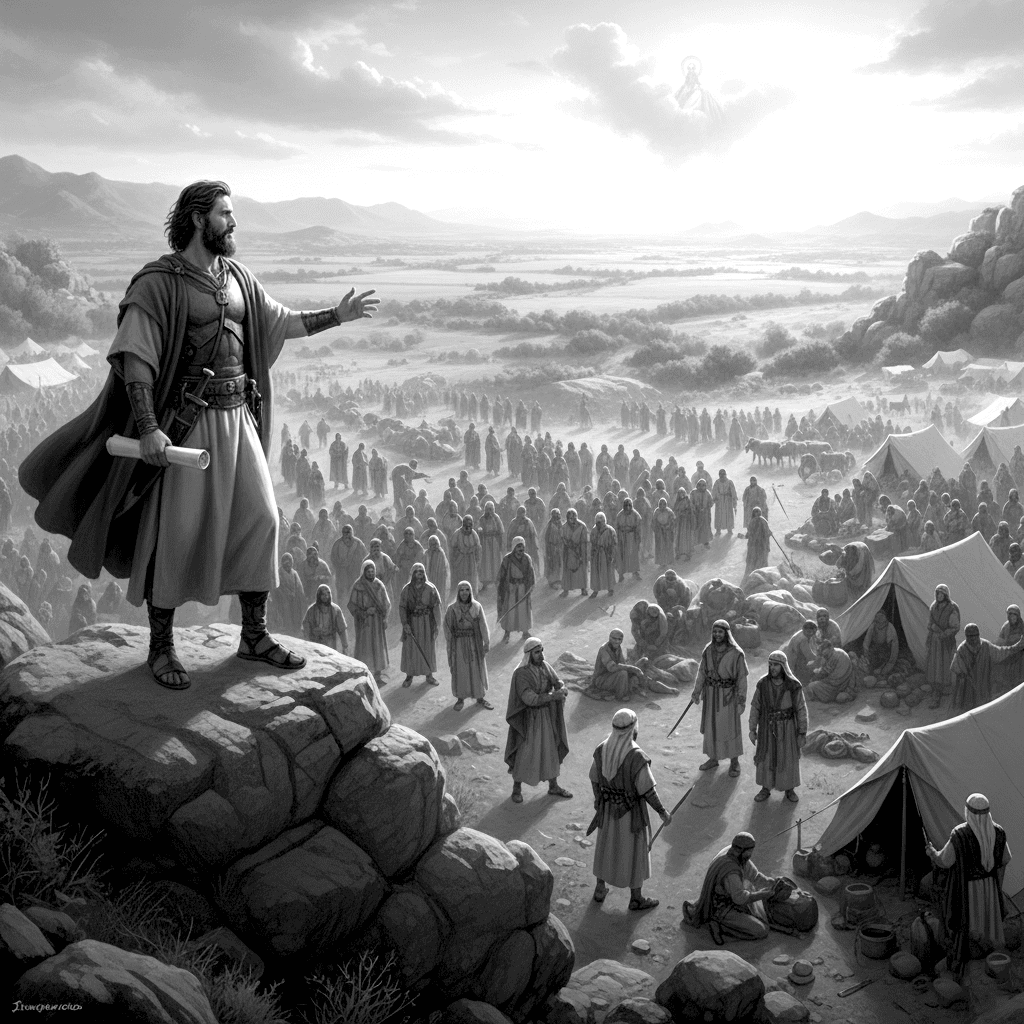
The Book of Joshua continues this theme of consecration that began with Moses. After Moses’ death, Joshua, son of Nun was consecrated by God to lead the children of Israel across the Jordan into Canaan (Josh. 1:1-9). Through Joshua, the consecrated leader, God wanted to fulfil the mission that had started through Moses. Now Joshua is playing a central role in organizing and preparing the people of Israel to enter the promised land. Chapter five of the Book of Joshua records God’s command to circumcise the new generation of Israelites who had not been circumcised during the journey from Egypt. God required this act of consecration for three reasons:
a. The new generation needed to become full members of Israel through circumcision
(cf. Gen. 34:15-16).
b. They had to be circumcised in order to participate in the Passover (cf. Exo 12: 43-44), commemoration of divine deliverance.
c. They needed to be spiritually prepared for the conquest of the land, the mission entrusted to them by God (Josh 5: 8-9).
Consecration as the Goal of the Law
Generally speaking, circumcision was practiced as an observance of the Law. In this sense, the foundational element of consecration is obedience, while its opposite is rebellion against God and God’s Law. In Joshua 5, as one consecrated to the Lord to fulfil His mission, Joshua carried out the first task of circumcising the new generation in obedience to the instructions of the Torah. This act brought them into the covenant of the Lord and enabled them to keep the Passover, which was to be celebrated a few days later according to the law. It also reminds Israel of their commitments to God, especially the command regarding circumcision, and of their responsibility to remain faithful as they prepared for upcoming festivals such as the Passover. Since circumcision was a strict requirement in the Law, the lack of circumcision among the new generation was considered offensive to God. Jewish distinctiveness was maintained through observing the rite of circumcision as prescribed in the Law, because it was required to maintain covenantal relationship with God. The command was given specifically to males because, in a patriarchal society, lineage, inheritance, and identity were traced through the father. Moreover, since a male represents a family, if the father was circumcised, the household was considered part of the covenant.
In Joshua 5:9, when God declares, “Today I have rolled away the reproach of Egypt from you,” God refers to the removal of the shame and accusation that rested on Israel because they had lived as an uncircumcised community-something strictly forbidden by the Law. In the Torah, circumcision is not optional but a mandatory covenant command. God states that every male must be circumcised, and the one who remains uncircumcised “shall be cut off from his people; he has broken My covenant” (Gen. 17:10-14). This strict legal requirement means that an uncircumcised community stood in a condition of covenant violation, carrying the ‘reproach’ of disobedience. During the wilderness journey, the new generation had not been circumcised (Josh. 5:4-7), placing them under the legal accusation of being outside the covenant sign established by God. This was especially shameful because Israel had left Egypt as God’s redeemed people (Exod. 6:6-7), yet they lacked the very mark that proved their covenant loyalty. By performing circumcision at Gilgal, Joshua restored strict obedience to the Law, removed the covenantal guilt, and enabled the people to keep the Passover, which itself required circumcision for participation (Exod. 12:48; Josh. 5:10). Thus, the naming of ‘Gilgal’ symbolizes God’s act of rolling away the legal reproach caused by their previous disobedience and restoring them as a fully consecrated, covenant-keeping people.
Consecration as Devotion to God
The word ‘consecrate’ comes from the Latin consecratus, meaning, ‘to make sacred or dedicate to a higher purpose.’ Therefore, ‘consecration’ is a choice to give oneself to God. As observed earlier, circumcision was the original sign of God’s covenant with Abraham (Gen 17:11), and it was required for every male in every generation. Because circumcision carried a symbolic link to sacrifice, it can also be understood as a sign of a person’s spiritual commitment. It further expresses God’s claim over human life, especially over the male who, according to Scripture, “belongs to the Lord” (Exo 13:2). In this sense, circumcision becomes a visible act of consecration-a reminder that one’s life is set apart for God. Such a practice calls God’s people into a lifestyle of devotion marked by intimate relationship with God.
The idea of ‘holiness’ in the Old Testament carries the idea of consecration-a separation from what is impure and a dedication to God’s service. Through circumcision, which functioned as a covenant sign (Gen 17:9-11), expresses sincere and faithful devotion to God. Specifically, in Joshua 5, the act of circumcision represented a renewed dedication to the Lord of the new generation of Israelites. This dedication to the Lord can strengthen the younger generation for the challenges ahead, preparing them for war and enabling them to take risks in obedience to the Lord. A consecrated community, therefore, is one that is fully devoted to God, ready to follow God’s purposes without hesitation. At the same time, this physical act of consecration points to a deeper spiritual reality. For example, the Law calls for an inward circumcision of the heart: “circumcise therefore the foreskin of your heart, and be no longer stubborn” (Deu 10:16). This command anticipates the promise of divine transformation, where “the Lord your God will circumcise your heart… so that you will love the Lord your God” (Deu 30:6; cf. Jer 4:4). Likewise, Ezekiel affirms that those who are “uncircumcised in heart or flesh” cannot enter God’s sanctuary (Eze 44:7, 9). Therefore, Joshua 5 provides a foundation for spiritual devotion to God, and thus circumcision-both physical and spiritual-illustrates the deeper meaning of consecration as wholehearted commitment to God.
Consecration: An Invitation to a Divine Life-Style
Joshua 5 portrays consecration as God’s way of shaping God’s people into a new divine life-style. First, consecration sets a life-style of freedom. Thus, the new generation is no longer slaves but free individuals belonging fully to the Lord. Second, consecration invites new generation into a new community for self-sufficiency. Third, consecration prepares the way for the Lord’s intervention, that reveals God’s immediate presence and guidance. Thus, Joshua 5 demonstrates that consecration forms a divine culture: a free people, a blessed people, and a God-centered people, ready to live under the rule and presence of the Lord.
a. Consecration Sets People Free
In Joshua 5, the act of circumcision functions not only as a covenant renewal but also as a symbol of freedom. Through the circumcision at Gilgal, the new generation was fully liberated to experience the freedom that had been promised to them in Egypt. The generation born in the wilderness had not been circumcised, and therefore they had not yet fully entered into the covenant privileges and responsibilities given to Israel. By obeying God’s command to circumcise this new generation, Joshua leads the people into a deeper experience of spiritual freedom. Only a consecrated people could truly live as God’s free people. This consecration frees them from the shame of their past. The “reproach of Egypt” (Josh 5:9) refers to their former identity as slaves and their history of disobedience and unbelief. Through consecration, God removes the burden of their past failures and gives them a new identity as His chosen and liberated people. They are no longer shaped by the memory of bondage but by the promise of God’s presence.
Consecration also frees them for obedience. Joshua 5 insists that before the Israelites march into battle or claim the land, they first have to submit themselves fully to God. The chapter instructs that obedience to the covenant should come before victory in the land. This demonstrates that true freedom is not independence from God, but commitment to God. When the people consecrated themselves, they became spiritually prepared to follow God’s direction with confidence and courage. Moreover, consecration frees them to enjoy God’s blessings. After the circumcision and healing period, the Israelites celebrated the Passover (Josh 5:10) and tasted the produce of the Promised Land for the first time (Josh 5:11-12). This marks a transition from wilderness living to covenant fulfillment. A consecrated people can enjoy God’s provision in ways that an unconsecrated people cannot. Freedom, therefore, is not only deliverance from bondage-it is entrance into the fullness of God’s promises.
Consecration Invites a New Community
Circumcision in the Old Testament is closely tied to form a distinct and holy people, a community set apart from surrounding nations. Although in some ancient cultures circumcision was connected with marriage or fertility, in Israel it became a covenant sign marking loyalty to God and membership in God’s people. This meaning becomes especially clear in Joshua 5. At Gilgal, the new generation born in the wilderness is circumcised before entering the promised land. Their circumcision marks a decisive transformation-from a wandering, disobedient generation to a settled, obedient people ready to receive God’s blessings. For example, after their consecration, Israel ate the produce of the land for the first time, and the manna ceased. This transition marks their movement into self-sufficiency through God’s blessing-a people now living in the promise, sustained not by survival food but by covenant prosperity. The renewal of the covenant sign at Gilgal becomes the foundation for a new community in Canaan, one built on obedience, purity, and dependence on God.
In Christian understanding, baptism takes up this same role. As circumcision marked entrance into the covenant people of Israel, baptism becomes the entrance into the new covenant community in Christ (John 3:3-5; Col 2:11-12). Just as circumcision prepared Israel to live as a holy nation in the land, baptism prepares believers to live as a self-sufficient and consecrated body, forming a new community shaped by God’s presence and promise.
Consecration Leads to the Lord’s Visit
In the Old Testament, consecration was often linked to a divine visitation or theophany. In other words, the rite of consecration-whether of a person or of dedication to God’s service-serves as the forerunner of God’s intervention. As described in Joshua 5:13, right after the consecration of the younger generation, the captain of the Lord’s host appears. Here Joshua encounters a supernatural being as Israel prepares to attack Jericho. The idea made clear here is that consecration prepares a person or community to receive divine revelation, and therefore, consecration becomes the gateway to victory. This may also signify that God Himself is fighting on behalf of Israel. In every divinely sanctioned battle, God Himself fights for Israel, but this required a special spiritual preparation marked by holiness. Thus, consecration becomes the necessary preparation for the Lord’s visit and Lord’s powerful work on behalf of His people.
Consecration for the Edification of the Church
As we have seen earlier, consecration edifies God’s community. This is relevant in the case of the Christian Church, which restores its identity, renews its relationship with God, and prepares for God’s active presence, as seen in Joshua 5. Consecration is a unique quality of the Church that distinguishes it from other communities, because through consecration-the act of surrendering in God’s presence-the Church becomes God’s property. Thus, sacredness is not merely a requirement but a means by which God builds and equips the people for divine mission. The Church today is called to be consecrated, to be set apart from the world, and to live a consecrated life before the Lord. For the new generation of believers, consecration has become a challenge, as they are attracted to various external influences such as power, money, fame, and media. However, one thing is sure, without consecration the Church often lacks the demonstration of God’s power.
As Hebrew Scriptures speak, an ‘uncircumcised heart’ and ‘uncircumcised ears’ are signs of stubbornness and spiritual resistance (Lev. 26:41; Jer. 6:10). That means, consecration shapes our attitudes, desires, and principles. Jesus Himself prays that His disciples would be sanctified for the mission (John 17:17-18), showing that consecration is both a gift of God and a responsibility of believers. God is still looking for surrendered believers who will serve God without hesitation. Such consecration strengthens, builds, and edifies the Church, enabling it to walk in God’s power and fulfill His purpose in the world.